Pre-order before 31st August 2026
All six books:
£65.00
MYSTERIES OF LEVITICUS
Mid-September 2026 Release
Buy for yourself and a friend £115.00
Bank: Monzo Bank
Account number: 16100562
Sort code: 04-00-05
IBAN: GB19MONZ04000516100562
BIC: MONZGB2L
USE THIS REFERENCE: Ref: MOTT
Send POP to the_metaphysician@servadei.com
From the address you are to receive your download link (and your friends).
And receive a complimentary Applied Meta-Physical lesson on: 666 the Mark of the Beast and how to overcome it.
Scripture quotations in this bookare from theAmerican Standard Version of the Bible, and
The Holy Bible in Modern English By Ferrar Fenton
INTRODUCTION
THE 27-CHAPTER ARC OF LEVITICUS
The Book of Leviticus is a Spiritual, Psychological, Somatic, Ritual, Symbolic and ReGenerative Text Book Teaching the ReGeneration of the Body-Temple encoded in analogous terms.
Each chapter encodes a stage in the ReGenerative process: 27 Stages and 27 chapters providing instructions for constructing the “temple not made with hands” - rather via consciousness.The sequence identified in Leviticus is as follows:
1–7Offerings and SacrificePurification of motive and substance8–10Consecration of the PriesthoodActivation of higher function11–15Purification LawsSeparation of coherent and incoherent states16Day of AtonementCentral balancing and reconciliation17–22Holiness CodesLearning lawful living23–25Sacred Cycles and RhythmsAlignment with cosmic order26Blessings and CursesConsequences of alignment vs fragmentation27Dedication and ValuationFinal consecration of all substance to the EVER-LIVING.
THE KEY OF THE SACRED SCIENCE
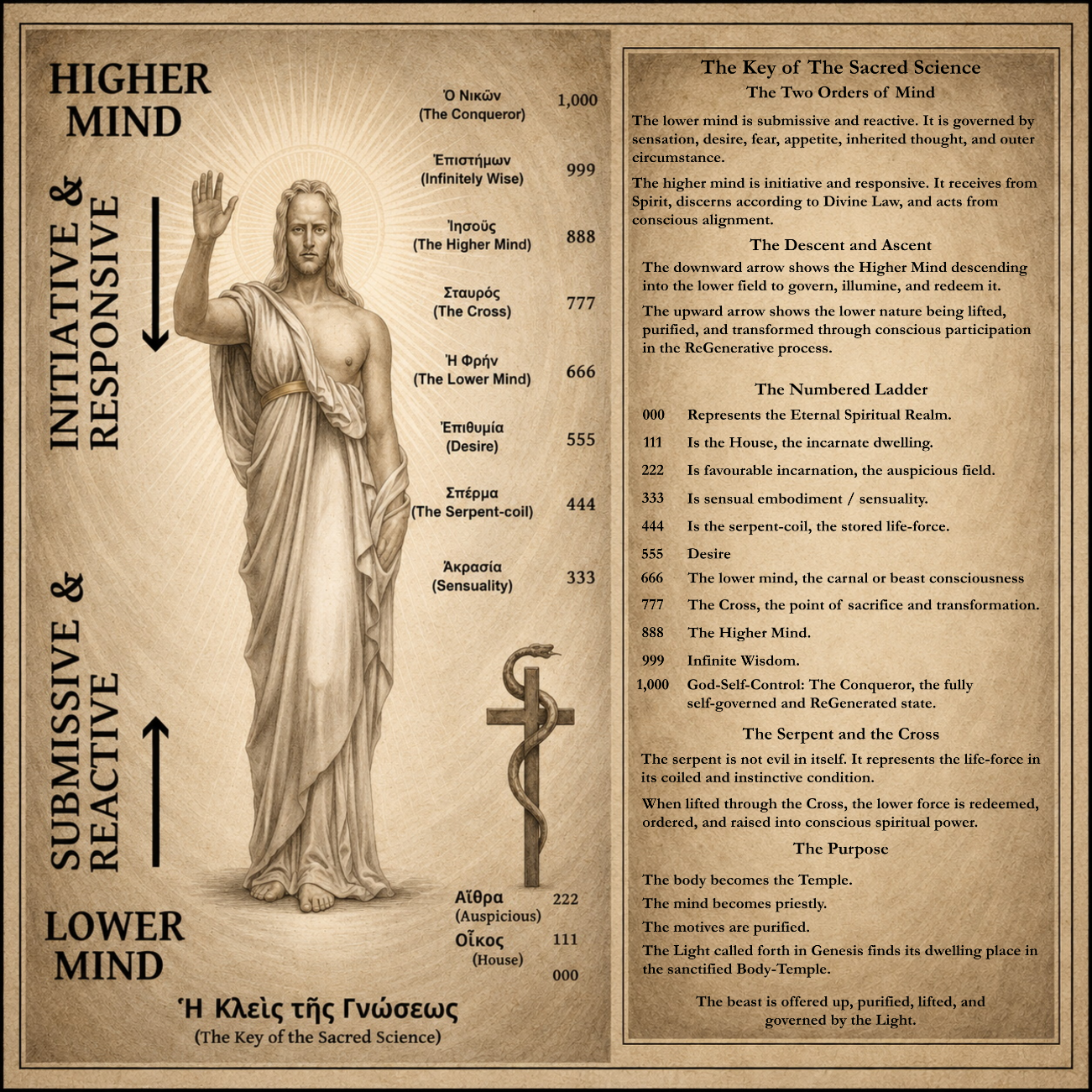
THE KEY PLATE
Original published by James M Pryse in the ‘Apocalypse Unsealed’ and updated with new
information by Stephen J. Serva Dei
LEVITICUS' POSITION IN THE TORAH / PENTATEUCH
LEVITICUS AS BODY-TEMPLE PURIFICATION GROWTH AND RE-CONSTRUCTION
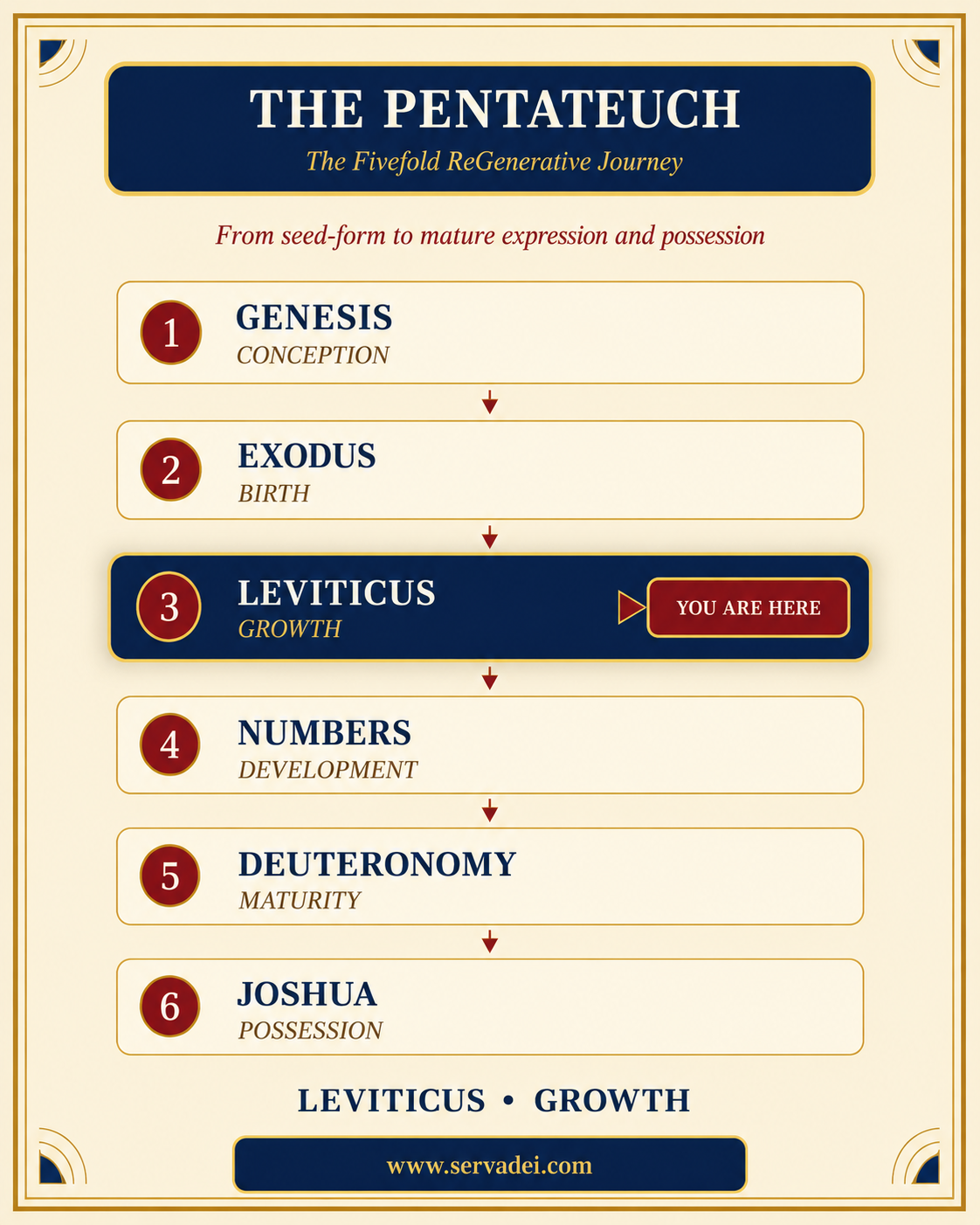
Leviticus is the central book of the Torah:
GenesisBlueprint and seedConception of identity2. ExodusLiberation and movementNew birth through transformation.3. LeviticusSanctification and ordering of the living templeGrowth through purification, ordering and sanctification.4. NumbersTesting and circulation in the wildernessDevelopment through testing, movement, circulation, and struggle.5. DeuteronomyIntegration and restatement before embodimentMaturity through conscious lawful embodiment.
6. Joshua
Possession. Taking full possession of the Promised Land
The Book of Leviticus presents the science of preserving, purifying, ordering, and ReGenerating the Living Temple of consciousness itself.
Genesis presents conception,Exodus presents new birth,Leviticus presents growth,Numbers presents development,Deuteronomy presents maturity – living with the Divine Law written into one’s heart and mind.
Joshua presents possession of the Promised Land / Body-Temple and driving out all degenerate behaviour and characteristics.
ReGeneration / Growth – Trees
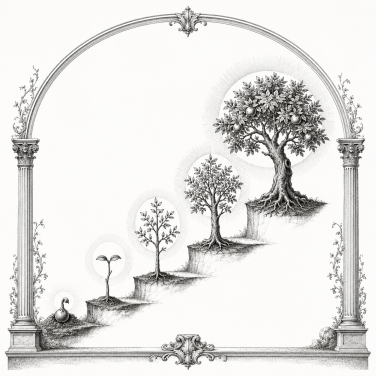
Book of Leviticus: Growth
ALL Life is SPIRIT.
GLOSSARY
Glossary of Terms Used in the Leviticus Interpretations
Author's Note: I have placed this glossary at the beginning so the reader may read the book of Leviticus and the meta-physical interpretations with confidence and a fuller understanding of how certain words are used and their deeper meanings, without needing to turn to the back continuously.
When the reader reads the glossary first, with the main symbolic language already clarified, they should grasp the import more thoroughly. These terms are working keys used throughout the commentary to show how Leviticus describes the purification, ordering, consecration, and ReGeneration of the Body-Temple.
***
Altar: The altar represents the sacred centre of transformation. It is the place where the lower nature, life-current, substance, motive, and offering are brought before the EVER-LIVING. In the inner life, the altar is the point at which the human will yields to Divine Order.
Altar Fire: The altar fire represents the transforming action of Spirit. It consumes what has been offered, not to destroy its value, but to lift it into a higher use. The fire must be kept burning continually, teaching that ReGeneration is a maintained process, not an occasional emotional act.
Anointing Oil: Oil represents Spirit, illumination, healing, softness, consecration, and sacred empowerment. To anoint is to set apart for Divine use. When oil is placed upon the priest, altar, vessels, or restored person, it marks that part of the field as belonging to the EVER-LIVING.
Atonement: Atonement means restored unity. It is the process by which what has been divided, polluted, burdened, or estranged is brought back into Divine Order. In Leviticus, atonement involves blood, priestly action, confession, cleansing, and renewed relation with the EVER-LIVING.
Beast-Nature: The beast-nature is the instinctive, reactive, appetite-driven, fear-driven, and self-protective level of the human being. It belongs to the natural body and has its place, but must not rule the mind, speech, motives, or conduct. In the burnt offering, the beast-nature is brought to the altar and surrendered to the fire of Spirit.
Blessing: Blessing is the ordered flow of Divine Life into a prepared field. It appears as fruitfulness, peace, safety, satisfaction, right timing, and Divine dwelling. Blessing is the result of alignment with Divine Law.
Blood: Blood represents the life-current. It is the vital force moving through the body and the inner life. Because “the life of the flesh is in the blood”. Blood belongs to the EVER-LIVING and must not be consumed by the lower self. In the offerings, blood returns life to the altar.
Body-Temple: The Body-Temple is the human being understood as a sacred dwelling place for the Light. Body, mind, heart, speech, life-current, appetite, thought, action, and relationship are all parts of this Temple. Leviticus teaches how this Temple is purified, ordered, consecrated, and made fit for Divine Indwelling.Bread: Bread represents nourishment, substance, daily support, and the prepared material of life. The continual bread in the sanctuary teaches that the substance of the whole life must be ordered and presented before the EVER-LIVING.
Burnt Offering: The burnt offering represents complete surrender. The animal is brought, identified with, washed, arranged, and entirely offered to the fire. In the inner life, it teaches that the lower nature must be brought consciously to God and transformed by Spirit.
Camp: The camp represents the ordered field of life surrounding the sanctuary. It includes the whole community of faculties, habits, relationships, and activities. Because the EVER-LIVING dwells in the midst, the camp must be kept clean.
Cedar: Cedar represents strength, uprightness, fragrance, and enduring structure. In cleansing rites, cedar appears with scarlet, hyssop, blood, and living water, showing that restoration requires strong structure as well as humble purification.
Clean: Clean means fit for contact, assimilation, service, or return to the camp. Cleanliness in Leviticus is not merely external hygiene. It is the condition of being rightly ordered for life, worship, fellowship, and Divine Presence.
Confession: Confession is the truthful naming of a condition. It brings hidden fault into the light. In the Leviticus process, confession allows what has been concealed, confused, or denied to be handled by priestly order and restored.
Consecration: Consecration means setting apart for the EVER-LIVING. A person, priest, altar, garment, house, field, animal, or offering may be consecrated. Once consecrated, it must be treated according to its sacred purpose.
Correction: Correction is the response of Divine Law to misalignment. It is not rejection. It is the pressure by which the field is called back to truth, humility, and covenant order.
Covenant: Covenant is the sacred bond between the EVER-LIVING and the people. It joins Divine promise, human response, obedience, remembrance, and sacred responsibility. Salt, Sabbath, blood, and Law all carry covenant meaning in Leviticus.
Death-Contact: Death-contact represents contact with forms from which life has departed. In the inner life, this may include dead habits, lifeless ideas, old identities, expired beliefs, and patterns no longer carrying Spirit. Such contact requires cleansing before full return to the sacred field.
Dedicated Thing: A dedicated thing is something set apart for the EVER-LIVING by vow or sacred intention. It must be valued, honoured, redeemed where permitted, or surrendered fully according to Divine Law.
Devoted Thing: A devoted thing belongs wholly to the EVER-LIVING. It has passed beyond ordinary use, sale, or redemption. In the inner life, it represents something completely surrendered to God, or something judged and removed from common use.
Divine Order: Divine Order is the underlying arrangement by which life, thought, relationship, time, body, land, speech, and worship are rightly governed. Leviticus trains the whole person to live according to this order.Door of the Tabernacle: The door of the Tabernacle represents the point of approach. It is the threshold where the ordinary field meets the sacred centre. Offerings are brought there because transformation begins when the person consciously approaches the Presence.
Dust: Dust represents the earthly field, the material ground, and the basic substance of embodied life. When blood is poured out and covered with dust, the life-current is reverently returned to the ground under God.
Ear: The ear represents hearing, obedience, receptivity, and inner attention. In priestly consecration and restoration after healing, blood and oil are placed on the right ear, showing that hearing must be purified and anointed.
Eighth Day: The eighth day represents new beginning after a completed cycle. Seven completes a process; eight begins the next order. Circumcision, priestly ministry, restored cleanness, and renewed service often appear on the eighth day.
Elder: The elder represents mature understanding, memory, tested judgment, and established wisdom within the field. Elders carry responsibility for collective recognition and order.
EVER-LIVING: The EVER-LIVING is the Divine Name used throughout the interpretation. It emphasises God as living, eternal, unchanging, present, and the Source of moral and spiritual order.
Eye: The eye represents perception, sight, interpretation, and the way the field sees. In measured justice, injury to the eye symbolises injury to perception. In the inner life, the eye must be clear and governed by truth.Fat: Fat represents inward richness, stored energy, hidden strength, and the best inner fuel of the life. In the offerings, the fat belongs to the EVER-LIVING. The lower self must not consume the richest inner force for itself.Field: The field represents the ground of life in which seed is received, grows, and produces fruit. It may refer to the body, mind, subconscious, land, household, community, or life-condition. A field must be cultivated, rested, guarded, and returned to God.
Fire: Fire represents Spirit in action. It purifies, consumes, transforms, and lifts the offering. Holy fire comes from Divine Order. Strange fire comes from impulse, pride, excitement, or self-generated religious heat.Firstborn: The firstborn represents first issue, first strength, first emergence, and the opening of the generative line. It already belongs to the EVER-LIVING and cannot be offered as though privately owned.Firstfruits: Firstfruits are the earliest results of growth. They represent the first evidence of new understanding, new discipline, new work, or new harvest. Firstfruits belong to God before the lower-self consumes the increase.
Flesh: Flesh represents embodied life. It includes the physical body, natural drives, habits, reactions, and the field in which spiritual law must become practical. Leviticus does not reject flesh; it brings flesh into order.
Garment: A garment represents outward expression, role, behaviour, identity, and visible function. A garment may become unclean, require washing, have a corrupted part removed, or be burned if the corruption remains in the weave.
Generative Field: The generative field is the inner and outer field through which life, ideas, children, works, habits, and future conditions are conceived and brought forth. Leviticus guards this field carefully because the future depends upon its order.
Glory: Glory is the visible or experiential manifestation of Divine Presence in an ordered field. When the offerings and priesthood are prepared, the Glory appears and the fire comes from the EVER-LIVING.Goat: The goat represents wilful force, independence, and self-directed energy. When brought rightly to the altar, even wilful force becomes material for peace, correction, or atonement.
Grain Offering: The grain offering represents consecrated substance. Fine flour, oil, frankincense, and salt show thought, labour, nourishment, Spirit, aspiration, and covenant brought into sacred order.
Hand: The hand represents action, handling, work, responsibility, and practical power. Blood and oil on the right thumb teach that action must be purified, consecrated, and governed by Divine Order.
Harvest: Harvest represents the matured result of seed, labour, time, and growth. It may be outward productivity, inner wisdom, character, understanding, or fruit of practice. The harvest must include mercy, firstfruits, and tithe.
Head: The head represents governing consciousness, direction, thought, and identity. The hand laid upon the head of the offering shows identification and responsibility. The anointed head shows Divine authority over thought and function.
Heart: The heart represents the inner centre of motive, affection, desire, sincerity, and living response. Holiness must enter the heart, because hidden hatred, pride, fear, or desire can pollute the field even when outward conduct appears orderly.
Holy: Holy means set apart for the EVER-LIVING. Holiness is sacred belonging. It involves order, purity, purpose, reverence, and fitness for Divine Presence. To be Holy, is to be a complete individual: Spirit; Soul, Body United as one.
Holy Place: The Holy Place represents the inner chamber of ordered service. It contains light, bread, and incense. In the inner life, it is the field where illumined thought, consecrated substance, and prayer are maintained before the veil.
Holy of Holies: The Holy of Holies represents the innermost centre of Divine Presence, Law, Mercy, and sacred mystery. It may only be approached by priestly order, authorised fire, incense, blood, humility, and atonement.House: A house represents dwelling, structure, personal life-field, family atmosphere, memory, and the built pattern of consciousness. A house may require inspection, cleansing, repair, removal of corrupted stones, or consecration.Hyssop: Hyssop represents humble purification. It is small, lowly, and cleansing. In restoration rites it appears with cedar and scarlet, showing that true cleansing requires both strong structure and humble application.
Incense: Incense represents prayer, fragrance, aspiration, and refined upward movement of consciousness. Incense must be offered with authorised fire. When wrongly offered, it becomes strange fire.
Inheritance: Inheritance represents the appointed portion, capacity, field, or promise belonging to a person, tribe, or faculty by Divine Order. Leviticus protects inheritance through Jubilee, redemption, and land-rest.
Inward Parts: The inward parts represent motives, feelings, appetites, desires, and hidden movements within the person. They are washed before the offering is burned, showing that hidden motive must be purified before transformation is complete.
Jubilee: Jubilee is the fiftieth year of release, return, and restoration. It proclaims liberty, restores inheritance, releases bondage, and reminds the people that the land belongs to the EVER-LIVING.
Kidneys: The kidneys represent hidden discernment, inward filtering, motive-testing, and the deep inner faculty that examines desire and impulse. In the peace offering, they are brought to the altar.
Land: The land represents body, inheritance, productive ground, community, environment, and the field that receives human conduct. The land must rest, receive Sabbath, be kept clean, and remain under Divine ownership.
Lamp: The lamp represents continual illumination, awareness. It must be fed by pure oil and tended from evening to morning. In the inner life, the lamp is the light of consciousness maintained before the Presence.
Leaven: Leaven represents fermentation, swelling, pride, old influence, and hidden corruption. It is excluded from certain offerings because the offering must not be inflated by the old rising nature.
Levite: The Levite represents sacred service, guardianship, support, and the faculty that assists the priesthood. The Levite guards the sanctuary, carries holy things, and maintains sacred order around the dwelling.
Life-Current: The life-current is the vital force represented by blood. It includes vitality, feeling, warmth, desire, courage, embodied energy, and the power that animates the individual. It must be returned to God and not consumed by the lower self/personality.
Light: Light represents Divine illumination, understanding, revelation, truth, and the Presence that makes order visible. Genesis calls forth Light; Leviticus prepares the dwelling place in which that Light may remain.
Living Bird: The living bird in the cleansing rite represents released life, restored thought, breath, and freedom after uncleanness has been healed. It is dipped in blood and living water, then released into the open field.
Living Water: Living water represents active cleansing, flowing Spirit, renewal, and the life-giving current that restores the field. It is used in rites of cleansing and restoration.Lower Self: The lower self is the ungoverned self-centred in appetite, fear, possession, impulse, pride, and self-will. Called the carnal mind, the beast, numerically 666. Leviticus does not merely suppress it. It brings its forces to the altar, cleanses them, and re-orders them under the EVER-LIVING.
Mercy Seat: The mercy seat represents the meeting place of Divine Law and Divine Mercy. It rests upon the ark and is approached on the Day of Atonement through incense, blood, and priestly order.
Molech: Molech represents a devouring false power that consumes the future. In the inner life, Molech appears wherever children, new life, new ideas, innocence, or future possibility are sacrificed to fear, ambition, status, control, ideology, or false worship.
Moses: Moses represents Divine Instruction, Law-bearing consciousness, and the faculty that receives instruction directly from the EVER-LIVING and communicates it to the people. In Leviticus, Moses receives the sacred order that shapes the Body-Temple.
Name: The Name represents Divine Identity, Presence, Nature, and authority. To guard the Name is to guard the holiness of speech and consciousness. To profane the Name is to use the word against the sacred centre.
Neighbour: The neighbour represents the other person within the shared field of life. Love of neighbour means recognising the other as belonging to the same Divine order. It includes truth, justice, mercy, correction without hatred, and refusal of revenge.
Oil: Oil represents Spirit, anointing, illumination, healing, softness, and sacred empowerment. It softens the grain, consecrates the priest, feeds the lamp, and marks restored hearing, action, and walking.
Offering: An offering is something brought consciously to the EVER-LIVING. It may represent surrender, substance, peace, correction, restitution, thanksgiving, dedication, or consecration. Every offering teaches how some part of life returns to God.
Peace Offering: The peace offering represents fellowship, harmony, and restored relationship. It brings strength, tenderness, will, motive, fat, and life-current into communion with the EVER-LIVING. Peace is ordered relationship.
Poor Brother: The poor brother represents the weakened part of the field, outwardly or inwardly, whose hand has failed. Divine Law commands that he be strengthened, not exploited.
Priest: The priest represents sacred administration within consciousness. This faculty discerns, offers, blesses, maintains the altar, handles holy things, and mediates between the field and the EVER-LIVING. The priest must be washed, clothed, anointed, sober, and discerning.
Priestly Faculty: The priestly faculty is the inner capacity to handle sacred things rightly. It distinguishes holy from unholy, clean from unclean, scar from plague, Divine Fire from strange fire, and true offering from self-directed impulse.
Purification: Purification is the process by which the field is washed, separated, restored, and made fit for sacred contact. It may involve water, waiting, offering, blood, oil, shaving, washing garments, or priestly inspection.Ram: The ram represents mature strength, leadership-force, and developed power. In consecration and offering, the ram teaches that strength must be surrendered, lifted, and used in sacred service.
Redemption: Redemption is the lawful recovery of what has been dedicated, sold, lost, or placed under sacred valuation. Redemption often requires the added fifth, teaching that return must include increase in responsibility.
Restitution: Restitution is practical repair. What has been taken, damaged, withheld, or misused must be restored. The added fifth shows that true repair strengthens the field beyond mere replacement.
Sabbath: Sabbath represents sacred rest, cessation, return to Source, and the rhythm by which the field is renewed. Sabbath belongs not only to the person, but to the land, labour, time, and the whole life.
Sanctuary: The sanctuary represents the sacred dwelling place of the EVER-LIVING within the ordered field. It is the centre around which all offerings, priesthood, cleansing, light, bread, incense, and atonement are arranged.
Sanctuary Shekel: The sanctuary shekel represents Divine measure. Sacred valuation must be measured by the standard of the sanctuary, not by fear, desire, market mood, pride, or personal advantage.
Scarlet: Scarlet represents the life-current, embodied vitality, and the red thread of living force. In cleansing rites, it appears with cedar and hyssop, joining life, strength, and purification.
Seed: Seed represents formative potential. It may refer to physical seed, thought-seed, intention, future work, generative power, or any beginning that can grow into fruit. Seed must be guarded, planted rightly, and returned to God through firstfruits and tithe.
Separation: Separation means being set apart from what defiles and set apart unto the EVER-LIVING. Sacred separation is not isolation for its own sake. It preserves function, holiness, and right belonging.
Seven Days: Seven days represent a complete cycle of cleansing, consecration, waiting, or formation. The sevenfold pattern marks completion before a new beginning appears on the eighth day.
Sin Offering: The sin offering represents correction of error, especially error revealed after ignorance, weakness, or imbalance. It teaches responsibility without collapse into shame. The error is brought to the altar and corrected by priestly order.
Skin: The skin represents the outer boundary where the hidden life meets the visible world. Marks in the skin reveal surface signs that may be harmless, healing, uncertain, or signs of deeper disorder.
Soul: Soul is the living totality of the person, the conscious field in which body, mind, memory, desire, speech, will, and Spirit are experienced. In Leviticus, the soul must be humbled, purified, ordered, and returned to God.
Strange Fire: Strange fire is self-generated religious heat. It represents spiritual impulse without obedience, emotional excitement, ambition, pride, display, or power used outside Divine command. It may look sacred because it uses sacred instruments, but it does not come from the altar of Divine Order.
Stranger: The stranger represents the unfamiliar person, influence, or part of the field that stands within reach of the community but does not arise from its native line. Divine Law protects the stranger and requires one law for native and stranger.
Tabernacle: The Tabernacle represents the movable dwelling place of the EVER-LIVING. In the inner life, it is the structured sacred centre in which the Light may dwell while the soul continues its journey.
Thanksgiving Offering: The thanksgiving offering represents gratitude made fresh and living. It must be received in its proper time. Gratitude belongs to the present moment and must not become stale residue.
Tithe: The tithe is the holy tenth of increase. It represents measured return to the EVER-LIVING from seed, fruit, herd, flock, and productivity. The tithe teaches gratitude, stewardship, and recognition that all increase comes from Source.
Trespass Offering: The trespass offering represents repair after boundary-crossing. It applies where sacred things, neighbour, trust, speech, contact, or property have been violated. It requires confession, offering, restitution, and often the added fifth.
Uncleanness: Uncleanness is a condition of disorder, unfitness, contamination, or temporary separation from sacred contact. It may arise through bodily flows, contact with death, disease, wrong assimilation, or disturbed states. Its purpose is not condemnation, but recognition and restoration.
Veil: The veil represents the boundary before the innermost Presence. It protects the Holy of Holies and teaches reverence. The mind may be illumined before the veil, but the deepest centre is approached only through appointed order.
Vow: A vow is a spoken dedication. It binds word, intention, value, and responsibility. A vow must be made carefully, because what is spoken before the EVER-LIVING enters sacred order. Ultimately, all words are “vows” – we are justified or condemned by our use of Words, whose body-temple we are.
Washing: Washing represents cleansing by water (Spirit’s conscious flow). It may apply to body, garments, inward parts, legs, vessels, or the whole field. Washing prepares the person or object for return to cleanness and service.
Water: Water represents cleansing, feeling, life-flow, renewal, and the capacity to wash the field. Living water is Spirit active and flowing. Bitter or disturbed water represents emotional or subconscious disorder requiring priestly handling.
Wilderness: The wilderness represents the field of testing, transition, simplification, and dependence upon God. Leviticus prepares the sanctuary; Numbers will test that sanctuary-life in the wilderness.
Witness: A witness represents what has seen, heard, or registered an act. Witnessing carries responsibility. Truth must not be hidden when the field requires testimony.
Woman: Woman represents the receptive, formative, generative field. In Leviticus this may relate to literal womanhood, but also to the inner mental and bodily matrix that receives seed, forms life, gives birth, and requires purification after emergence.
Word: The word is the creative and binding power of speech. Through the word, vows are made, confession is spoken, blessing is given, truth is witnessed, and the Name is either honoured or profaned. Leviticus trains the mouth to serve the EVER-LIVING. We are each specifically designed to be a vehicle of Jehovah/ God/Absolute Intelligence/EVER-LIVING.
Yoke: The yoke represents bondage, burden, compulsion, or imposed servitude. Divine Law breaks the yoke of Egypt and enables the individual to walk upright before God.
CHAPTER ONE
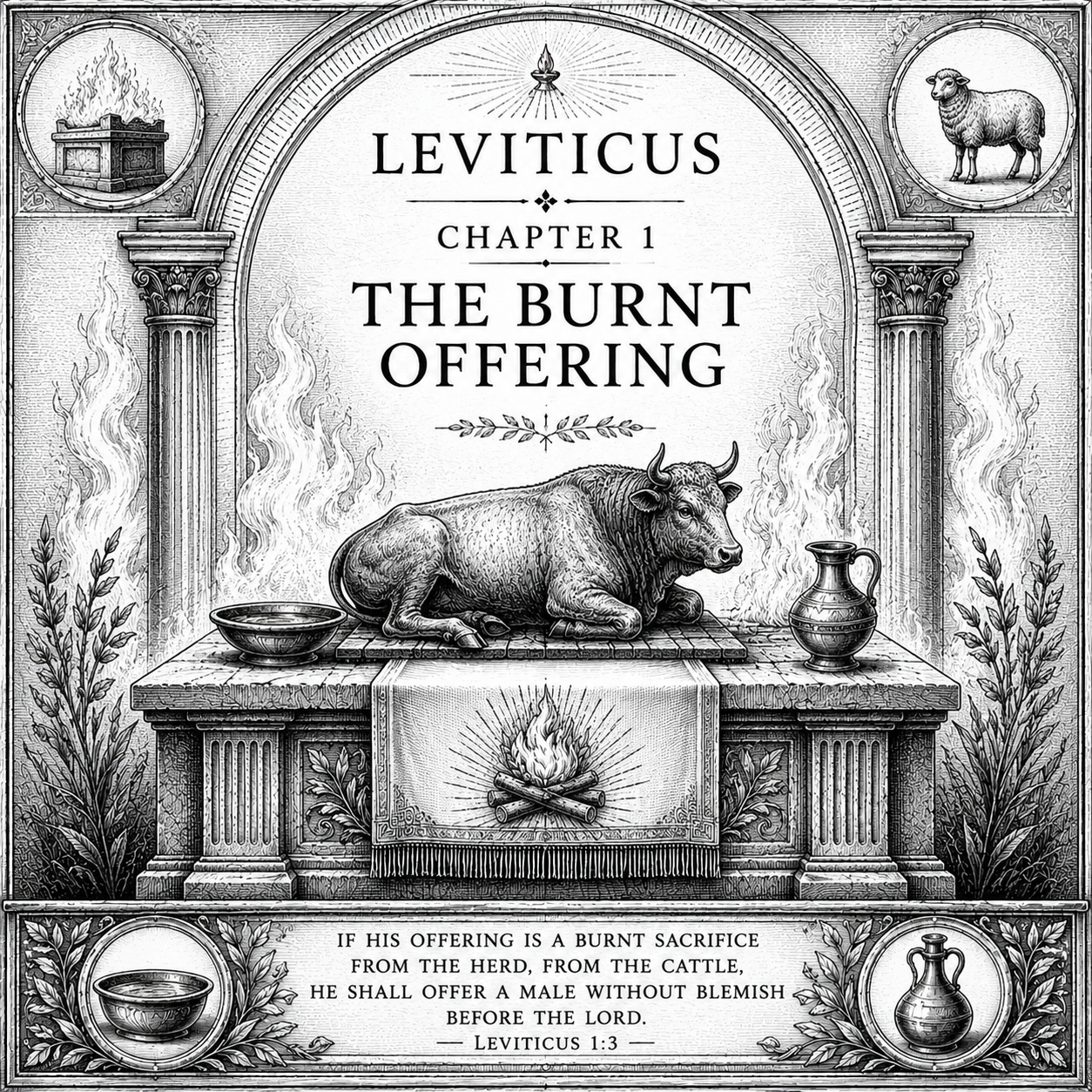
CHAPTER ONE: THE BURNT OFFERING
Each chapter consists of:
The Scripture Passage
Meta-Physical Interpretation
What the Initiate Learns from this Lesson
Leviticus begins with a call.
The EVER-LIVING calls to Moses from the Tabernacle of the Congregation and gives instruction concerning the offerings. This opening is important. The work of purification begins when consciousness becomes still enough to hear the Divine Voice.
This ‘voice’ wells up from deep within, from a place outside of our daily conscious range, yet, from deep within the body-temple itself. I experienced this as a boy sitting in church and the voice boomed within me “I AM THAT I AM”. This experience rendered me speechless for a lengthy period of time - some days - afterwards.
Genesis began with Light; Exodus reveals liberation from bondage; the new birth, and now Leviticus reveals how we are to purify, order and sanctify the temple to make it a suitable dwelling place for the Light.
The Light called forth in Genesis is constructing a dwelling place for itself. That place is our Body-Temple. We are each to participate in its construction into a suitable home. We are to cleanse the temple by willingly bringing our lower beastly nature to the altar.
We must offer our lower mind, the carnal mind, the reactive 666 consciousness, our beastly mind into the transforming fire of Spirit.
The first chapter of Leviticus therefore begins with the burnt offering. The offering up of the animal nature (the beast) within man. It is the surrender of the lower field of appetite, fear, instinct, desire, impulse, reaction, and inherited thought.
This offering begins the process by which the lower life-force is lifted, purified, and governed by the Light. We offer up the beast part of our nature to be purified, united with, and governed by the Light.
META-PHYSICAL INTERPRETATION
Passage One
Leviticus 1:1–2
1 And the EVER-LIVING called unto Moses, and spake unto him out of the tent of meeting, saying,
2 Speak unto the children of Israel, and say unto them, When any man of you offereth an oblation unto the EVER-LIVING, ye shall offer your oblation of the cattle, even of the herd and of the flock.
Interpretation
This Divine Call begins the book.
This statement reveals that the ReGenerative work begins from above. The way of purification does not arise in the lower mind, it receives instruction. The Higher Mind hears the EVER LIVING, understands, and responds; when the Higher Mind speaks, the Lower Mind hears.
This is conscience.
Moses represents the awakened inner leader, the faculty within consciousness able to receive Divine Instruction and communicate it to the whole being; He represents the abstract mind.
The offering is brought from the herd, the flock, or the birds. These represent degrees of the animal nature within man.
The herd represents the heavier, stronger, earth-bound nature. This is the dense field of survival, force, appetite, labour, possession, and physical instinct.
The flock represents the emotional and social nature. This is the field of attachment, dependency, herd instinct, fearfulness, sympathy, and group identity.
The birds represent the lighter, aerial, thought-like movements of consciousness. These are subtle impressions, mental reactions, nervous impulses, imaginations, and fleeting desires.
All animal propensities must be brought to the altar.
This tells us that no part of the lower nature is outside the ReGenerative process. Gross appetite, emotional dependency, and subtle mental disturbance all require purification. Each is brought according to its kind. The Divine Law meets each person at the stage where they stand, yet the direction is always upward.
Passage Two
Leviticus 1:3
3 If his oblation be a burnt-offering of the herd, he shall offer it a male without blemish: he shall offer it at the door of the tent of meeting, that he may be accepted before the EVER-LIVING.
Interpretation
The offering from the herd represents the strongest and most physical form of the beast nature.
This is the lower life-force in its dense expression. It includes bodily appetite, instinctive reaction, possessiveness, anger, pride of strength, resistance, and the unconscious force that drives behaviour before the Higher Mind has spoken.
The offering must be male because this stage deals with active force. It is the outward-driving principle of the lower nature. It pushes, takes, reacts, asserts, competes, and resists. When sanctified, this same force becomes courage, strength, firmness, and faithful action.
The offering must be without blemish. This means the offering must be whole, honest, and undivided. The person must bring the real condition to the altar, without concealment, excuse, or self-deception.
Divided motive cannot build the Body-Temple. Double mindedness cannot enter the Kingdom.
A blemished offering represents mixed intention, hidden resistance, outward religious action with inward refusal, or partial surrender while preserving a secret attachment to the lower mind.
It is essential that each brings their offering willingly. ReGeneration cannot be imposed from outside. The person must bring the offering of their own volition.
Consciousness must agree to the purification process. The Soul must recognise the lower nature and choose to place it under Divine Government.
The offering is brought to the door of the Tabernacle. The door is the inner threshold between ordinary life and sacred transformation. The animal nature cannot pass inward unchanged. It must first be brought to the altar, recognised, offered, and purified.
The door therefore represents willingness, it is the place where the individual says: I bring myself, I present my lower nature, its desires, fears, appetites and instincts. I bring the beast in me to the Light to be transmuted.
Passage Three
Leviticus 1:4
4 And he shall lay his hand upon the head of the burnt-offering; and it shall be accepted for him to make atonement for him.
Interpretation
The laying of the hand upon the head is one of the deepest acts in the chapter.
The hand represents agency, responsibility, contact, and conscious participation. The head represents governing consciousness. By placing the hand upon the head of the animal, the person acknowledges relationship with the offering. The lower nature is recognised as one’s own. The person ceases projecting the beast onto others, onto circumstance, onto family, society, history, or the world.
This is the beginning of truthful self-observation.
The person recognises: this anger is rooted in me. This is my appetite, fear, desires, and reactiveness. These are the instinctive impulses I have to offer up, transmute and control.
These and more are the lower 666 mind of the beast.
The act of laying the hand upon the head acknowledges at-one-ment.
Atonement is the restoration of unity. Fragmentation begins when the person is divided from the truth of their own state; their own Higher mind (888).
True healing begins when consciousness brings the hidden lower nature into the presence of the Divine Law. The hand upon the head also shows that the offering is conscious.
ReGeneration requires conscious willing participation. The lower life-force is lifted through awareness, responsibility, and surrender. The person and the offering are brought into one field so that the lower may be transformed by the higher.
Passage Four
Leviticus 1:5
5 And he shall kill the bullock before the EVER-LIVING: and Aaron’s sons, the priests, shall present the blood, and sprinkle the blood round about upon the altar that is at the door of the tent of meeting.
Interpretation
The killing of the animal represents the ending of the lower nature’s independent rule. The beastly nature may no longer govern the being. Its former authority is brought to an end before the EVER-LIVING.
This is the death of the reactive ruler. The blood is then brought to the altar. Blood is the life-current. It represents vitality, movement, circulation, warmth, desire, passion, and the animating principle flowing through the whole body. “The Life is in the Blood”.
The blood is sprinkled around the altar because the life-force must be returned to sacred order. Life must circulate around the centre of consecration. The altar represents a fixed centre in consciousness where the lower is given up to the higher. When the blood is placed around the altar, the whole life-current is brought into relationship with Divine Law.
This is the first reordering of circulation. Before ReGeneration, the life-force circulates around appetite, fear, possession, self-defence, and desire. After consecration begins, the life-force circulates around the altar.
This means life is no longer organised around the lower mind. It is reorganised around God.
The priests perform this work because the life-current cannot be handled carelessly. The priestly faculty represents inner administration, the higher function in consciousness trained to handle sacred energy. The beast may be brought by the person, but the priestly faculty must order the offering.
Passage Five
Leviticus 1:6
6 And he shall flay the burnt-offering, and cut it into its pieces.
Interpretation
The skin is the outer covering, it represents appearance, personality, image, self-presentation, defence, and the surface identity by which the lower nature hides itself. Persona means mask. It also means ‘per’ = unit, sona = sound. The personality directs the life force, instead of the individual.
We are to correct this.
To skin the offering means to remove the covering from the beast nature. The person begins to see what lies beneath appearances. Many lower movements clothe themselves in respectable garments. For example:
Fear may present itself as caution, pride may present itself as principle, control may present itself as care. Desire may present itself as love, and anger may present itself as justice.
We remove the skin so we can identify the true composition of the errors. The offering is then divided into pieces.
Dividing into pieces is identifying each component and determining which needs treatment firs. This is the faculty if discrimination at work. We must examine our own beastly nature, and know exactly what it is impelling us to live in error.
We thoroughly examine the lower mind. We need to know each of its parts. It is the Higher, priestly mind in each of us, which enables us to distinguish and identify each component of our value systems.
We are to learn how to distinguish appetite from nourishment. Impulse from executive Will. Fea from Wisdom. Possessiveness from love. Reaction from response. Force from power. Sensuality (333) from Life’s currents (888)
We are to take “a sword” to teach of these and more and divide them correctly.
This type of division is sacred analysis which serves synthesis. The beast nature is brought into the Light so that its energies may be ordered and transformed. We do not throw anything blindly into the fire.
We act only when we understand what to do and when.
Passage Six
Leviticus 1:7–8
7 And the sons of Aaron the priest shall put fire upon the altar, and lay wood in order upon the fire;
8 and Aaron’s sons, the priests, shall lay the pieces, the head, and the fat, in order upon the wood that is on the fire which is upon the altar:
Interpretation
The priests place fire upon the altar. Fire is the transforming principle. It is Divine Energy acting upon the lower substance. Fire purifies, releases, refines, and lifts.
The wood represents the prepared thought-structures that sustain the process of transformation. Wood once belonged to the tree. In consciousness, the tree represents organised growth. Wood on the altar represents thought made ready to serve transformation.
The priests arrange the parts. This reveals order. Spiritual transformation requires right placement. The lower energies must be ordered before they are offered. Next, we place the head upon the altar. This means the governing principle of the lower mind is offered into fire. The reactive intelligence, the carnal reasoning, the beast consciousness, the 666 lower mind, is brought under Divine Flame.
The fat is also placed upon the altar. Fat represents stored richness, accumulated energy, reserve, satisfaction, and the hidden fuel of desire. In the lower nature, this stored energy feeds appetite and self-enclosure.
Offered upward, it becomes fuel for devotion, warmth, and spiritual intensity. The fire consumes the ordered parts. This reveals transmutation.
The lower life does not vanish into emptiness. It ascends. Its dense condition becomes subtle. Its heaviness becomes fragrance. Its reaction becomes response. Its instinct becomes strength. Its desire becomes aspiration. Every transmutation imparts strength to us to continue through the process.
Passage Seven
Leviticus 1:9
9 but its inwards and its legs shall he wash with water. And the priest shall burn the whole on the altar, for a burnt-offering, an offering made by fire, of a sweet savor unto the EVER-LIVING.
Interpretation
The inwards represent the hidden inner field. They are the concealed motives, appetites, impulses, emotions, instincts, and subconscious movements within the person. The legs represent movement, action, conduct, and the path walked.
Both must be washed. This teaches that ReGeneration requires purification of motive and behaviour. The inward field must be cleansed. The outward walk must be cleansed. A person cannot offer the beast nature while preserving hidden impurity in motive. Nor can one claim inward devotion while outward conduct remains governed by reaction.
“To thine own self be true” - and the Divine Law will do the rest.
Water prepares what fire transforms. Water cleanses the inward and outward movements. Fire lifts them into higher expression. The whole offering is then burned upon the altar. This is the meaning of the burnt offering. The whole lower nature is offered. Not a fragment. Not a portion. Not a symbolic gesture while the secret centre remains untouched.
The entire beast is lifted. This is why the offering becomes a sweet savour to the EVER-LIVING.
The sweet savour is the fragrance of transformed life. The lower nature, once governed by appetite and reaction, has become an ascending expression. The life-force has been purified and lifted into Divine Order.
God receives the essence of the offering because the offering has become aligned with the Law of Life.
Passage Eight
Leviticus 1:10–11
10 And if his oblation be of the flock, of the sheep, or of the goats, for a burnt-offering; he shall offer it a male without blemish.
11 And he shall kill it on the side of the altar northward before the EVER-LIVING: and Aaron’s sons, the priests, shall sprinkle its blood upon the altar round about.
Interpretation
The offering from the flock represents the emotional and relational animal nature. Sheep and goats belong to the field of following, thoughts of attachment, group movement, stubbornness, dependence, and social identity.
This is the lower nature as it appears in the emotional life. The sheep may represent passive following, fearfulness, dependency, and the tendency to move with the group. The goat may represent stubbornness, wilfulness, independence without wisdom, and resistance to guidance. Both are brought to the altar.
This reveals that we must also consecrate the emotional life. The flock nature in man must be purified. The desire to belong, to resist, to follow, to dominate, to be approved, or to remain separate must all be offered.
The offering is killed on the north side of the altar. North commonly signifies the region of intellect, coolness, judgment, and hidden thought. This indicates that the emotional animal nature must be brought under clear discernment. Feelings must be illumined by understanding. The blood is again sprinkled around the altar; the emotional life-current must circulate around Divine Law. Relationship, belonging, affection, and social behaviour must be consecrated.
The flock offering shows that ReGeneration includes the emotional body and the social self. We cannot construct the Temple while the emotional nature remains governed by fear, dependency, stubbornness, or herd-consciousness.
Passage Nine
Leviticus 1:12–13
12 And he shall cut it into its pieces, with its head and its fat; and the priest shall lay them in order on the wood that is on the fire which is upon the altar:
13 but the inwards and the legs shall he wash with water. And the priest shall offer the whole, and burn it upon the altar: it is a burnt-offering, an offering made by fire, of a sweet savor unto the EVER-LIVING.
Interpretation
The same pattern appears again because the Law is consistent. The animal is divided, the head is offered, the fat is offered, the inwards and legs are washed.
Only then is the whole burned.
This repetition teaches that every layer of the lower nature must pass through the same sacred order. Recognition, responsibility, Priestly handling, discernment, washing, fire, ascent.
The priests exercise meticulous care at each step.
The head of the flock offering reveals the governing thought behind emotional reaction. The fat reveals stored emotional charge. The inwards reveal hidden feeling and motive. The legs reveal conduct, habit, and the way one walks in life.
Each part is washed, arranged, and offered.
Thus, our emotional nature becomes purified feeling, attachment becomes love, stubbornness becomes steadfastness, dependency becomes trust in God; herd-consciousness becomes fellowship in Divine Order. The whole flock nature is lifted.
Passage Ten
Leviticus 1:14–16
14 And if his oblation to the EVER-LIVING be a burnt-offering of birds, then he shall offer his oblation of turtle-doves, or of young pigeons.
15 And the priest shall bring it unto the altar, and wring off its head, and burn it on the altar; and the blood thereof shall be drained out on the side of the altar;
16 and he shall take away its crop with the filth thereof, and cast it beside the altar on the east part, in the place of the ashes:
Interpretation
The bird offering represents the subtle lower nature. Birds belong to the air. They represent thoughts, impressions, nervous movements, imaginations, and light mental patterns. This is the offering of the mental and airy field.
Some lower movements are dense and obvious. Others are subtle and refined. A person may have overcome visible appetite and still be governed by spiritual pride, fantasy, comparison, nervous agitation, cleverness, intellectual vanity, or hidden ambition.
The bird offering reveals that even the subtle thought-life must be brought to the altar. The turtledove and pigeon are gentle birds. This means the offering may come from a quieter and more delicate level of consciousness. The lower nature is not always fierce. Sometimes it is soft, anxious, sentimental, restless, or inwardly divided. The priest handles this offering carefully, meticulously.
The head is removed and burned: the governing thought of the subtle lower mind is placed into fire. The crop and feathers are removed: these represent what has been gathered, stored, or outwardly displayed in the mental field.
The bird is opened but not divided completely; this reveals that subtle thought-forms are handled differently from heavier animal forces. They are opened to the Light, exposed, and offered. The law remains the same, in every sacrifice, yet the handling differs according to the substance. This is Wisdom in action.
Passage Eleven
Leviticus 1:17
17 and he shall rend it by the wings thereof, but shall not divide it asunder. And the priest shall burn it upon the altar, upon the wood that is upon the fire: it is a burnt-offering, an offering made by fire, of a sweet savor unto the EVER-LIVING.
Interpretation
The chapter closes by repeating the same end: fire and sweet savour. Whether the offering is from the herd, the flock, or the birds, the purpose is ascent. Dense instinct, emotional nature, and subtle thought, the initiate is to take to the transforming fire. The “sweet savour” reveals successful transmutation.
When the lower condition has been lifted; the beast has become fragrance. The life-force has been purified and returned to God. This is the beginning of the Body-Temple, the temple “not built with hands”.
Before the priesthood is fully consecrated, before the laws of purification are unfolded, before the Day of Atonement is revealed, before the feasts and Jubilee are established, the lower nature is brought to the altar. This is the first stage. The Light called forth in Genesis seeks a dwelling place. Leviticus begins by preparing that dwelling place through offering.
The Inner Meaning of Leviticus Chapter One
Leviticus Chapter One teaches that the first act of ReGeneration is the offering of the beastly nature into the fire of Divine Law. The lower mind is submissive and reactive. It is governed by sensation, fear, appetite, desire, inherited thought, and outer circumstance.
The higher mind is initiative and responsive. It receives from Spirit, discerns according to Divine Law, and acts from conscious alignment. It observes closely and responds to others, in alignment with the Divine Law.
The burnt offering shows the turning point between these two orders of mind. The beast is brought, and the hand placed on the head. The life currents is consecrated. The outer covering is removed, and the parts discerned. Both inner and outer movements are washed. Then the priestly faculty orders the offering and it is placed in the fire.
The fire transforms it; the aroma ascends as the lower is transmuted into the higher. This is the mystery of the burnt offering, where our animal nature becomes spiritual fuel. The lower force is lifted into higher expression, and, construction of the Body-Temple begins.
The Chapter in One Sentence
Leviticus Chapter One reveals that ReGeneration begins when the individual consciously brings the lower beast nature to the altar of Divine Law, accepts responsibility for it, allows the priestly faculties to order and purify it, and offers it wholly into the sacred fire so that the life-force may be lifted, transformed, and made a pleasing expression of the EVER-LIVING.
What The Initiate Can Learn From This
The first offering is the offering of the lower nature.
The beast represents the carnal mind, the 666 lower consciousness, the reactive field of appetite, fear, sensation, and desire. The altar is the fixed centre in consciousness where the lower is given up to the higher.
The hand upon the head reveals responsibility and conscious identification. The blood around the altar reveals the consecration of the life-current. The skinning reveals the removal of appearance and self-deception.
The dividing reveals discernment, washing of the inwards and legs reveals purification of motive and conduct. The fire reveals transformation, and the sweet savour reveals the fragrance of life-force lifted into Divine Order.
Leviticus begins here because the Light cannot dwell securely in a temple governed by the beast. The beast must be offered, purified, lifted, and governed by the Light.
Summary
Genesis says, “Let there be Light.” Leviticus reveals how the dwelling place for that Light is prepared.
Chapter One begins the work by bringing the lower nature to the altar. The animal nature, whether dense like the herd, emotional like the flock, or subtle like the birds, is recognised, offered, washed, ordered, and transformed.
This chapter teaches that the Body-Temple is constructed through conscious offering. The lower nature is raised, transmuted, its energy is lifted. Its force becomes fuel, the life-current is consecrated, and its hidden motives are washed, and consequently, its outward movement is purified.
The burnt offering is therefore the beginning of ReGeneration, the first conscious act by which the lower nature is brought to the altar, purified by water, transformed by fire, and lifted into the Light.
What Leviticus Chapter One Teaches the Initiate
Leviticus Chapter One teaches the first movement of conscious purification: the offering up of the lower nature. The chapter begins with the EVER-LIVING calling to Moses from the Tabernacle.
Genesis begins with Light being called forth. Leviticus begins with the voice of God calling from the inner dwelling place. The Light has appeared, and now the question is: how shall the human being become a fit dwelling place for that Light?
The answer begins with offering. The burnt offering is an allegorical picture of the first inner requirement of the path. The initiate willingly brings the animal nature to the altar. This means the instinctive, reactive, fearful, appetitive, and self-driven parts of the person are to be consciously presented before God.
We do not bury or excuse them, they are not allowed to govern the life from the subconscious, or via impulses. We bring them forward to identify them clearly and offer them up. The animal, the beast, represents the lower nature because it lives by instinct. It reacts to hunger, fear, comfort, possession, breeding, territory, and survival, it is the 666 plane of consciousness.
These are not forces of evil in themselves, they are an innate aspect of the natural body. Yet when they emerge and take control of speech and behaviour, that person is living from the beast-nature, impelled by its instincts, controlled by greed and fear and the lust of the flesh to dominate, or be submissive, instead of living expressing the purity and clarity and initiative of the Higher Mind.
The burnt offering teaches that the first work of ReGeneration is surrender. Our offering is to be without blemish. This teaches sincerity, an initiate cannot bring a false offering, a half-offering, or a carefully edited version of the self.
Everything is exposed and naked to the Spirit, and seeking to hide things only deceives those who are insincere - it hinders their progress – and causes more suffering.
So, one needs to acknowledge their nakedness before God, and trust the process, trust God, and sacrifice the impure and selfish motive, that it may be killed and the energy, the blood, be redirected into right-use-ness, that is, into worthwhile activities.
Being open and sincere is being honest, both with God and with oneself.
Once on the altar, that fixed place of sincerity where we are to offer up the beast, the hand is placed upon the head of the offering, as confirmation of identifying with the beast and accepting the responsibility for transmuting it.
The initiate acknowledges, “This belongs to my field, my consciousness, and is a part of what moves me. I bring it forward consciously”. There is and can be no blaming of others, or hiding behind circumstance, nor dividing the self into ‘respectable’ and ‘rejected parts’. We accept the complete lower nature and offer it up.
The blood is brought to the altar; blood is the life-current. This teaches that the work is deeply significant, not a casual and superficial display to be seen by men. ReGeneration consists of a total transformation of character. Out of the lower 666 beastly, and carnal mind, into the higher 888 Christ mind and everything brought to God.
The initiate is to learn that we do not breathe, God breathes through us, and to acknowledge this and dedicate the life force in service to God - i.e. to each other. All the energy that once fed and controlled appetite, fear, anger, pride, compulsion, or self-will is placed on the altar and transmuted into Divine Order by living in alignment with the Divine Law and feeding it, pure unblemished right-use-ness motives.
Once on the altar, once the initiate has identified those parts to be transmuted her/his offering is then divided and arranged. This is symbolic teaching that the initiate is to understand the lower nature and its parts.
Then, the head, the inward parts, the legs, the fat, and the whole structure of the offering are handled in order. The initiate learns to treat the lower self as a part which is to be relinquished, offered, sincere, then analysed, ordered, and cleansed. This means that thought, motive, movement, appetite, and inner feeling are to be called to attention and diligently controlled.
The inward parts and legs are washed with water. The simplicity of this allegory is striking; it is a beautiful teaching. Our inward parts represent motives, feelings, appetites, and hidden movements. Our legs represent walk, conduct, and outward movement.
So, we wash our motives, changing them from selfishness, into service. Not selfless, service. Service includes everyone; no member of the community is left out. As the initiate washes their deepest inner motives, the be-have-i-our is renewed, cleansed, purified.
The initiate is cleansed inside and outside, in desire and in action. The inside of the cup is washed and the outside reveals it is clean inside even from a distance; i.e. one’s reputation.
Finally, the fire on the altar consumes the whole offering. Fire represents the transforming action of Spirit, as it becomes real and tangible to the initiate’s mind and feelings.
So, everything, the whole beast, the whole lower mind the initiate offers is transformed. This is a daily, incremental process. The initiate, using the power of the Word, that is of the Spirit in action, raises up her/his lower nature and dedicates it to service. To higher use.
Carnal mindedness is being supplanted, and the energy of the beast becomes fuel for consecration. This is why the burnt offering is described as a “sweet savour” to the EVER-LIVING.
When the initiate willingly brings the lower beastly nature and washes, orders and surrenders it to the fire of the Spirit, it becomes acceptable. God receives the life that has been returned to Divine Order.
So, for the initiate, Chapter One teaches the beginning of the path:
Willingly bring the beast-nature to the altar, take full responsibility for it, and yield the life-current to God. This is a process, where our deepest degenerate desires may be washed, ordered, renewed and transformed by the Spirit.
The fire of the Spirit transforms everything that was once in slavery to the lower mind. This opening chapter teaches that the sacred life begins when the hu-man being stops being ruled by instinct and begins offering every force of life to God.
“Thou shalt not steal” means ‘everything belongs to God’, including ourselves. We do not breath, God breathes through us. We do not despise the beast, our own lower nature, we are to participate actively and daily in consecrating it. We bring the body into Divine Order.
We do not fight the beast, good does not fight perceived evil; it enters into it and transforms it into its own nature. The initiate’s lower nature is no longer allowed to rule, each initiate acknowledges it, offers it up, and it is purified and raised.
Leviticus Chapter One therefore teaches the first law of the Body-Temple: The Light can dwell securely only where the beast-nature has been brought to the altar and given to the transforming fire of the EVER-LIVING.
***
SUPPORT THE COMPLETION OF THESE 4 SUPPLEMENTARY VOLUMES TO GENESIS BY PREORDERING – DETAILS ARE ON THE FIRST PAGE.
‘The New World Comes Through Us, It Is Not Foisted On Us”.
All the money in the world means nothing if anyone is living in misery, while others hoard more than their needs. Money, like Water is Living Spirit and must flow to be a catalyst for community GROWTH.